The Surprising Danger to Your Cat’s Food, And How to Fix It
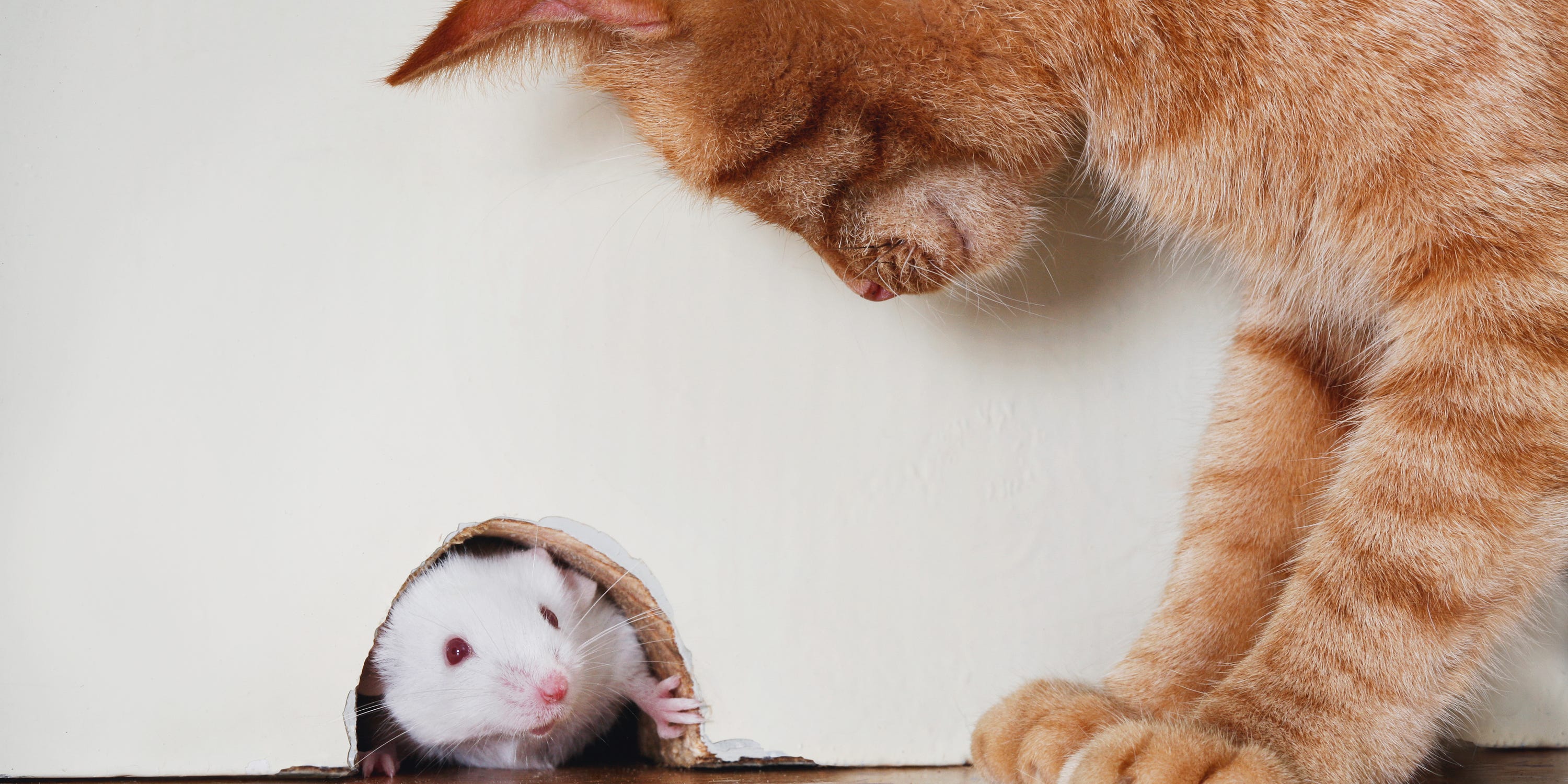
Does Cat Food Attract Mice?David Malan - Getty Images
In my last apartment, I befriended a tiny brown mouse that appeared to live in the stairwell. Whenever I left, Mouser would come out as I locked my door and then hop down the stairs with me as I headed down. I never saw where he came from; he just always showed up. And then, my husband and I went on vacation. We came home to our cat, Fiona, looking unnervingly proud of herself, and Mouser, dead on the dining room floor.
Only when we were moving out did I discover Mouser didn’t actually live in the stairwell. He really lived in the top drawer of our built-in, right below where we kept the cat food. Which begs the question: Was Mouser living there because of access to the cat food itself? Vets say it’s likely. Here’s why.
Does cat food attract mice?
Unequivocally yes, says Seth Colman, D.V.M., medical director at VEG ER for Pets. “Your cat’s dinner can unintentionally become a neighborhood buffet,” Colman says, especially when you leave out bowls of food overnight, don’t clean up food on the ground, or don’t secure the food bags properly.
Mice will come running for both wet food and dry kibble, the latter of which is easy for them to carry away and eat elsewhere. And don’t think just having a cat in the house will be enough to keep mice away. They’re adept at avoiding capture.
How to keep mice out of cat food
Carly Fox, D.V.M., senior veterinarian in the emergency and critical care service at the Schwarzman Animal Medical Center, shared a few easy solutions for keeping mice away from your cat’s food. First, she suggests picking up any food (wet or dry) that hasn’t been eaten after half an hour. Then, clean up around the feeding area daily. For storage, keep the food in an airtight container or invest in an automatic feeder that only dispenses around mealtime or when activated by a microchip.
Kelly Hood, D.V.M., speaking for Pet Health Digest, agrees, noting that you should be cautious of mice anywhere cat food is kept or ends up.
“Think beyond the bowl,” she said. “Securing dinner will have limited benefit if mice can still reach an open food bag in the garage or spilled kibble behind a cabinet.”
How dangerous are mice around cat food?
If, despite your best efforts, a little Mouser of your own came through and nibbled on your cat’s food, you probably don’t have much to worry about. Just throw out the food in the bowl or the bag, or both, depending on where the mouse stopped for lunch. Then wash the bowl and the surface by the food, because mice can leave invisible bacteria that can cause disease.
If you notice your cat has already eaten some of the food after a mouse got to it, watch out for any symptoms like vomiting, diarrhea, less interest in food, or unusual sleepiness. If any of those appear, take your cat to the vet right away.
Ultimately, Fiona was fine after killing poor Mouser, and we moved her food to an airtight container once we settled into our new home. So far, no new mice. Fingers crossed it stays that way.
You Might Also Like
Eat These Expert-Recommended Foods to Lower Your Blood Pressure Naturally
We've Tested Over 300 Sets of Bed Sheets. These Are the Best.
170 Corny Jokes That Are Seriously Funny
Source: Nature



0 Comments